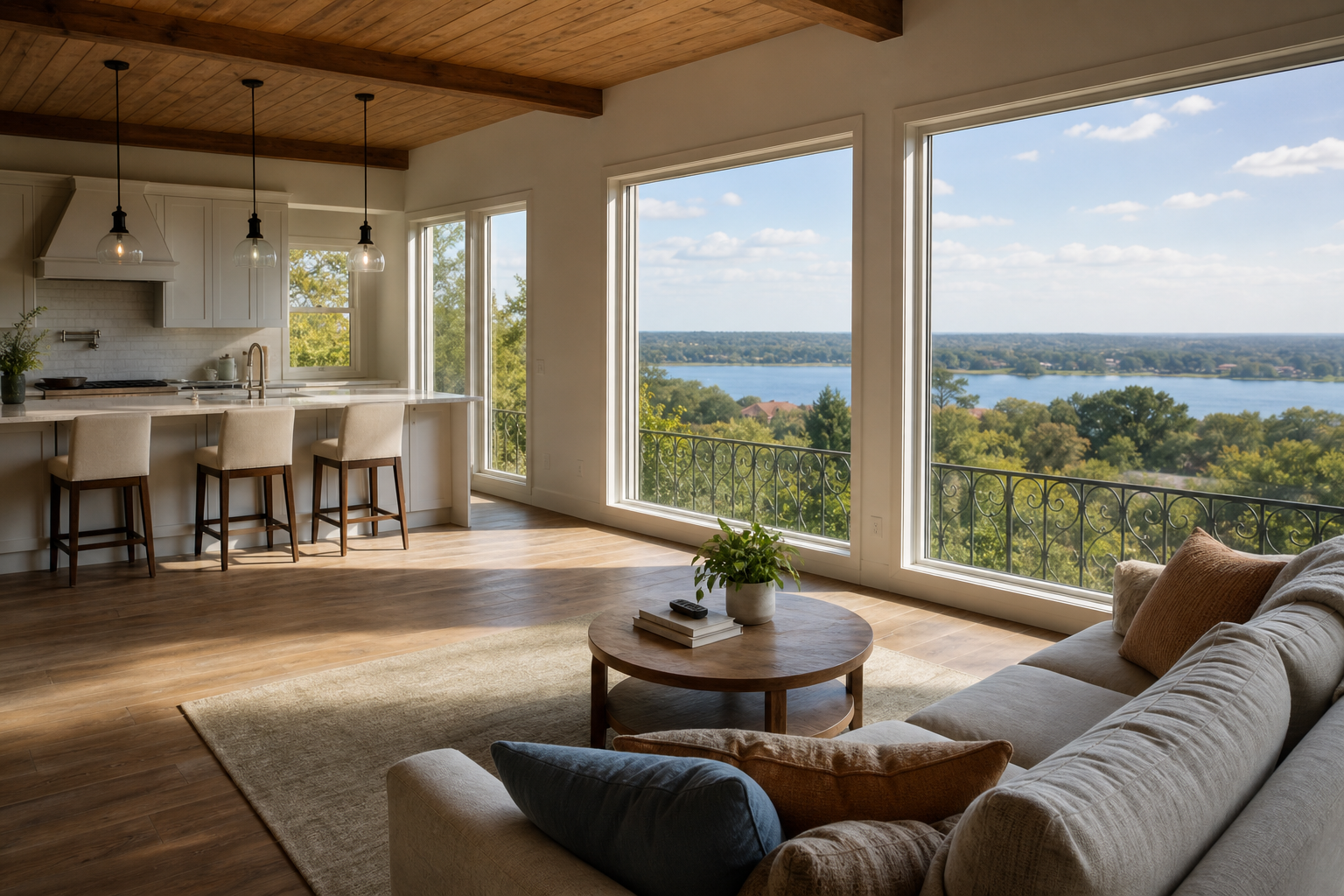
Clermont, FL offers a lake-centered outdoor lifestyle, a growing suburban amenity base, and straightforward access to Orlando's job market. With a median sale price around $435,000 and steady population growth, it's one of Central Florida's most in-demand suburbs for buyers seeking scenery and convenience.
Is Clermont, FL a good place to live?
Clermont is one of Central Florida's fastest-growing suburbs, offering a lake-centered outdoor lifestyle, rolling terrain unlike most of the flat Orlando metro, and practical access to Orlando's job market via SR-429 and U.S. 27. Recent local market data puts the median sale price at $435,000 with a median of 22 days on market, reflecting steady, consistent demand from buyers who want more space and scenery without sacrificing commute times.
Key Takeaways
- The median sale price in Clermont is $435,000, with homes selling in a median of 22 days, based on recent local market data as of September 2026.
- Clermont's modeled 2026 population is estimated at 54,663, up more than 26% since the 2020 Census, according to World Population Review.
- The median household income in Clermont is approximately $82,306, roughly 10% above the Florida statewide median, per ACS 5-year estimates from StateDemographics.com.
- Clermont sits about 25 miles west of downtown Orlando, with SR-429 providing a direct route to Disney, the attractions corridor, and the broader metro job market.
- The Clermont Chain of Lakes is a defining lifestyle feature, offering boating, paddling, waterfront parks, and lakefront home options that create a distinct micro-market within the city.
What makes Clermont different from other Orlando suburbs?
Most of Central Florida is flat. Clermont is not. The rolling hills above the Chain of Lakes give the city a visual character you won't find in most of the metro, and that geography shapes everything from the view out your back window to the bike routes through the area.
I work across a broad stretch of Central Florida, from Ocoee and Winter Garden on the west side to Lake Nona and beyond. Clermont has its own distinct feel. It's not the same market as Winter Garden, and it's not the same lifestyle as Davenport or Kissimmee. If you're weighing multiple areas, my post on Clermont vs. Davenport vs. Kissimmee breaks down the differences in more detail.
The Clermont Chain of Lakes is the anchor of the city's identity. Residents have access to boating, kayaking, paddleboarding, and fishing across a connected system of lakes, with Waterfront Park sitting right on Lake Minneola as a hub for community events, triathlons, and everyday recreation. That's not a marketing line, it's a genuine lifestyle differentiator for buyers who want water access without paying barrier-island prices.
Downtown Clermont vs. South Clermont: which part fits you?
The city isn't one uniform neighborhood. The historic downtown area near Lake Minneola has older homes, walkable streets, and proximity to Waterfront Park and local events. It has a small-town character that newer construction areas don't replicate.
South Clermont, closer to Lake Louisa State Park, trends toward master-planned communities with newer construction, larger lots in some cases, and quick trail access into the park. If you're comparing a resale home in the historic district to a new build in a planned community, you're looking at very different property profiles, HOA structures, and everyday rhythms.
Lakefront homes on the Chain of Lakes are their own category entirely. Direct boating access and private docks put those properties in a separate conversation from non-lakefront homes in the same zip code. That's the kind of distinction that only matters when you're actually making a decision, and it's exactly what I walk buyers through before we start touring.
How does Clermont compare to nearby suburbs?
Here's a quick look at how Clermont stacks up against two nearby markets I work in regularly, based on recent aggregated public listing data as of September 2026:
| Area | Median Sale Price | Median Days on Market |
|---|---|---|
| Clermont | $435,000 | 22 |
| Ocoee | $420,000 | 45 |
| Winter Garden | $530,000 | 18 |
These are area-level medians. An individual home's value depends on condition, street, lot, build year, and timing. But the pattern tells you something real: Clermont sits between Ocoee and Winter Garden on price, and it moves faster than Ocoee. Winter Garden is the priciest of the three and moves the quickest. Every buyer I work with in these markets needs to understand those dynamics before making an offer.
What is the lifestyle and community like in Clermont?
Clermont has grown significantly. The 2020 Census put the population at 43,021. ACS 5-year estimates from StateDemographics.com show it climbing to about 46,853, and a modeled 2026 estimate from World Population Review puts it at approximately 54,663, with roughly 3.5% annual growth. That's a city that's been expanding steadily for years, not a sleepy town that stumbled into growth.
The median household income, based on ACS 5-year data, is approximately $82,306, which is about 10% above the Florida statewide median for the same period. That economic profile reflects a community with real purchasing power and demand for the amenities that come with it.
The City of Clermont's own demographic data and the city's OpenGov profile both point to Clermont functioning as a self-contained suburban city, not just a bedroom community. Medical facilities, schools, and recreational centers are available locally. The retail and restaurant corridors along U.S. 27 and SR-50 have expanded alongside the population, meaning most routine errands don't require a drive into Orlando.
That matters practically. Buyers who move here from denser metro areas often tell me they expected to give something up in terms of convenience. Most of them are surprised by how much is available locally.
Outdoor recreation: what you can actually do here
The Chain of Lakes lifestyle isn't just a selling point. It's an everyday reality for residents who want it. Boating, kayaking, paddleboarding, and fishing are accessible from multiple public launch points. Waterfront Park hosts community events, triathlons, and casual weekend activity. The South Lake Trail and surrounding bike infrastructure attract cyclists, runners, and walkers who use the terrain and lake views as part of their regular routine.
Lake Louisa State Park, just south of the city, adds hiking, camping, and additional paddling options for residents who want to get further off the beaten path without leaving the area. For buyers who prioritize an active outdoor lifestyle, Clermont delivers in a way that few other Orlando suburbs can match at this price point.
Commuting and regional access
Clermont sits roughly 25 miles west of downtown Orlando. SR-429 (the Western Beltway) connects the area to Disney, the attractions corridor, and the broader metro relatively efficiently. U.S. 27 runs north-south through the city, providing access to additional employment and commercial areas. For anyone working in hospitality, theme parks, or industries tied to the attractions corridor, Clermont is a practical location.
The broader Orlando metro economy spans tourism and hospitality, healthcare, education, logistics, and technology. Clermont's location within Lake County means residents can access that job base while living in a quieter setting. The commute is real, and traffic on SR-50 during peak hours is real too. I always encourage buyers to drive the route at the time of day they'd actually be commuting before they commit to a neighborhood.
Every buyer's situation is different. Whether the commute works for you depends on where you're going, when you're going, and how much you value what Clermont offers in return. That's a conversation worth having before you're under contract.
If you want to understand why neighborhood-level knowledge shapes decisions like this one, I wrote about why hyperlocal knowledge still wins in Central Florida real estate and it's directly relevant here.
Clermont is worth a serious look if the outdoor lifestyle, the lake access, and the price point relative to Winter Garden appeal to you. The market moves at 22 days median, so when the right home comes up, you need to be ready. That's where having someone who knows the area, the builders, the HOA structures, and the micro-market differences makes the difference between getting the home and watching it go to someone else.
If you're considering a move to Clermont or anywhere in Central Florida, I'd be glad to walk you through what's available and what actually fits your situation. Schedule a consultation here and we'll start with a real conversation, not a sales pitch.
Curious what clients who've been through this process say? You can read reviews on Google, Zillow, and Realtor.com.
Frequently Asked Questions About Moving to Clermont, FL
Is Clermont, FL a good place to live if I work in Orlando?
Clermont works well for many Orlando-area commuters, particularly those working near the attractions corridor or along the SR-429 corridor. The drive to downtown Orlando runs roughly 25 to 35 minutes in lighter traffic, though SR-50 can back up during peak hours. Driving your actual commute route at commute time before buying is the best way to know if it works for your schedule.
How far is Clermont from downtown Orlando and the major theme parks?
Clermont is approximately 25 miles west of downtown Orlando and about 20 miles from the Walt Disney World area via U.S. 27 and SR-429. Drive times vary with traffic, but the western beltway connection makes the theme park corridor more accessible from Clermont than the mileage alone suggests.
What kind of outdoor activities can you do on the Clermont Chain of Lakes?
The Chain of Lakes supports boating, kayaking, paddleboarding, fishing, and waterfront recreation from multiple public access points. Waterfront Park on Lake Minneola is a hub for community events and triathlons. Lake Louisa State Park, just south of the city, adds hiking, camping, and additional paddling for residents who want more trail-based options.
How does living in Clermont compare to Winter Garden or Ocoee?
Clermont's median sale price of $435,000 sits below Winter Garden ($530,000) but above Ocoee ($420,000) based on recent local market data. Clermont's rolling hills and lake access give it a distinct character, while Winter Garden offers a more developed downtown and faster market pace. The right fit depends on your priorities around price, commute, lifestyle, and property type, those differences are worth walking through before you decide.
How has Clermont's population changed in recent years?
Clermont's population was 43,021 at the 2020 Census, and a modeled 2026 estimate from World Population Review puts it at approximately 54,663, reflecting roughly 3.5% annual growth. That consistent growth has driven expanded retail, services, and housing development across the city over the past several years.
Equal Housing Opportunity. All information is deemed reliable but not guaranteed; measurements are approximate and buyers or their agents should verify all critical details. This article is general information only and does not constitute legal, tax, or financial advice. Confirm your specific numbers with your title company, tax advisor, or lender. Eve Metlis is licensed with Watson Realty Corp. and regulated by the Florida Department of Business and Professional Regulation (DBPR).